What Is Distorted Text? The Complete Guide to Word Distortion
If you search for ” What Is Distorted Text“, you’ll get results pointing in two completely different directions. Some are Photoshop tutorials showing designers how to warp, stretch, and melt letters for posters and album art. Others point to a cursed text generator that turns plain sentences into jagged, glitchy Unicode text for Discord bios and horror memes.
What is distorted text? Most articles cover only one side, leaving half of the search intent unaddressed. This piece covers both the distorted text meaning in graphic design and the version built from Unicode characters online, and exactly how distorted text vs. cursed text differ, since those two terms are constantly confused.
What Is Distorted Text
Distorted text is any text where the normal shape, spacing, or structure of the letters has been deliberately altered, either visually through design software or technically through character-level tricks.
That single definition splits into two distinct practices:
- Visual distortion, done in tools like Photoshop or Illustrator, where letters get stretched, warped, blurred, or melted as part of a graphic design piece.
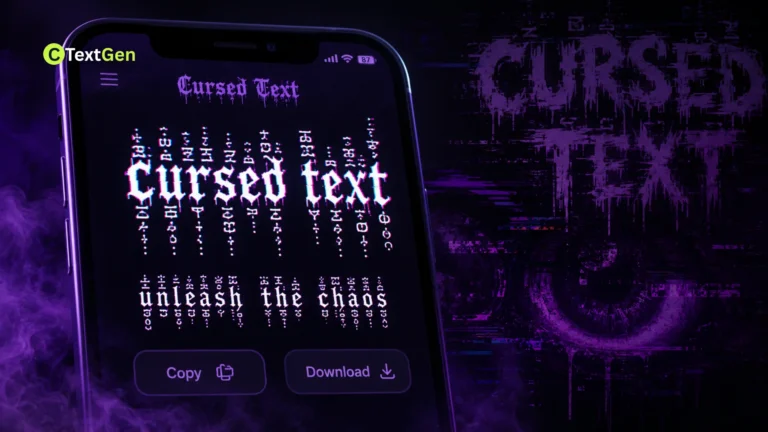
- Character-level distortion, done through plain text using Unicode symbols, where letters get buried under extra marks so they look glitchy or corrupted without any image editing at all.
Knowing which one applies to your situation changes everything about the tools and techniques you’d actually use, so it’s worth covering both properly instead of picking a side.
Distorted Text Meaning in Graphic Design
For designers, distorted text is a deliberate visual effect, not an accident and not a Unicode trick. It’s a core part of poster design, album covers, streetwear graphics, and advertising, going back long before digital tools existed.
Common Distortion Techniques Designers Use
- Stretching and skewing expand or compress letters horizontally or vertically to create tension or motion.
- Warping: using a tool’s built-in warp or envelope distort feature to bend text along a curve or shape.
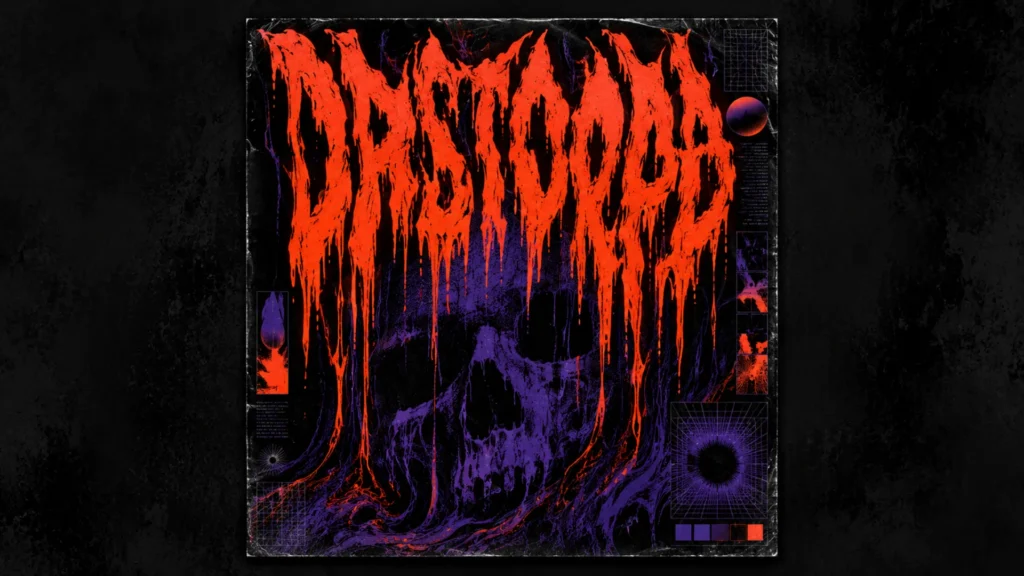
- Liquid and melt effects, which make letters look like they’re dripping or dissolving, are popular in music and streetwear branding.
- Glitch and RGB-split effects, mimicking a broken screen or signal interference, are often layered with static or scan lines.
- Grunge and blur distortion rough up clean typography to look weathered, printed, or degraded on purpose.
Software like Adobe Photoshop and Illustrator handle most of this through transform tools, warp presets, and layer effects, while some designers still build custom distortion by hand for a more unique result.
Where Design Distortion Shows Up
Distorted typography is everywhere once you start noticing it. Band merchandise and album covers often use melting or glitching text to match a genre’s tone. Streetwear brands lean on warped, stretched lettering for a rebellious, DIY feel. Movie posters and horror marketing frequently use grunge or blur distortion to signal tension before you read a single word of the tagline.
What Is Distorted Text Online?
This is the version most casual internet users mean when they ask about distorted text: plain writing that looks glitchy or broken without any image editing involved at all.
How Unicode-Based Distortion Actually Works
This style is built using Unicode combining diacritical marks, a set of characters mostly found in the range U+0300-U+036F. These marks exist for entirely normal reasons, like the accent in “café” or the tilde in “jalapeño.” A combining mark attaches to whichever letter comes directly before it, sitting above, below, or through that base character.
Online generators exploit the fact that Unicode never limited how many marks can stack onto a single letter. A few marks create a subtly rough look. Dozens create the jagged, overflowing effect most people picture, often called Zalgo text or glitch text, depending on the intensity.
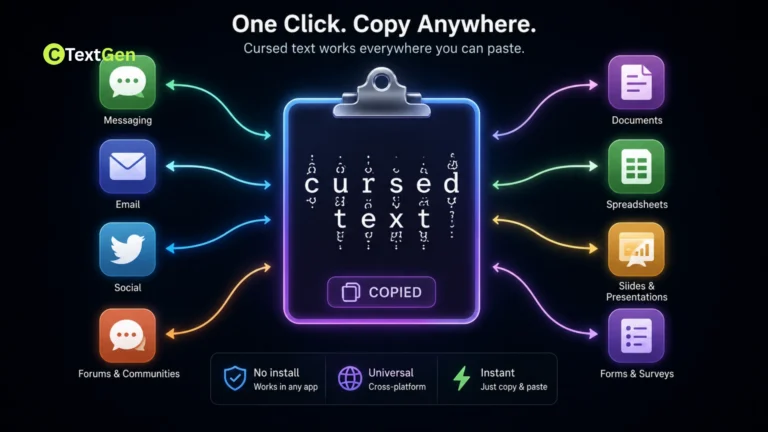
Because it’s built from real Unicode characters rather than an image or a downloaded font, this kind of distorted text can be typed, copied, and pasted into nearly any text field, from a fan fiction comment to a Discord username.
Distorted Text vs Cursed Text
These two terms overlap heavily but aren’t perfect synonyms.
Distorted text is the broader, more neutral term. It applies equally to a warped poster headline and a glitchy Unicode username, since both involve altering the normal appearance of letters. Cursed text is narrower and carries an internet-specific tone. It refers almost exclusively to the Unicode-based version, tied to the internet slang meaning of “cursed” as something strange, unsettling, or off in a funny way.
In other words, every piece of cursed text counts as distorted text, but plenty of distorted text, like a warped concert poster, has nothing to do with the internet culture sense of “cursed” at all.
Why People Actually Search for Word Distortion Online
What is distorted text? Their intent splits roughly into three groups, and it’s worth recognizing which one you fall into.
Some people want a design technique for a specific project, like a poster, logo, or thumbnail, and need to know which software feature or effect to use. Others stumble across glitchy Unicode text somewhere, often in a fan fiction comment section or a social media caption, and want to know what it’s called and how it was made. A smaller group wants to recreate that Unicode effect themselves for a username, caption, or meme.
That mix of intent is exactly why generic “here’s a generator” pages fall short. They answer the third group and ignore the other two entirely.
Practical Examples
- Design distortion: a concert poster with the headline stretched and melted so the letters appear to drip down the page.
- Light Unicode distortion: a short phrase with a handful of combining marks, giving it a subtly rough edge while staying fully readable.
- Heavy Unicode distortion: a username or caption buried under dozens of stacked marks, closer to visual noise than plain text, often used for horror or meme content.
Tips for Using Distorted Text Well
- For design work: keep distortion legible at a glance, especially for headlines meant to be read quickly, and test how the effect holds up at smaller sizes before finalizing it.
- For Unicode text online: stick to short phrases, since full sentences become genuinely hard to read once the marks stack up.
- Match the tool to the medium. Photoshop and Illustrator are built for print and image-based distortion; Unicode generators are built for plain text that needs to be pasted anywhere.
- Check platform compatibility first. Some usernames, form fields, and messaging apps strip Unicode combining marks entirely, so test before relying on them in an important context.
Common Mistakes to Avoid
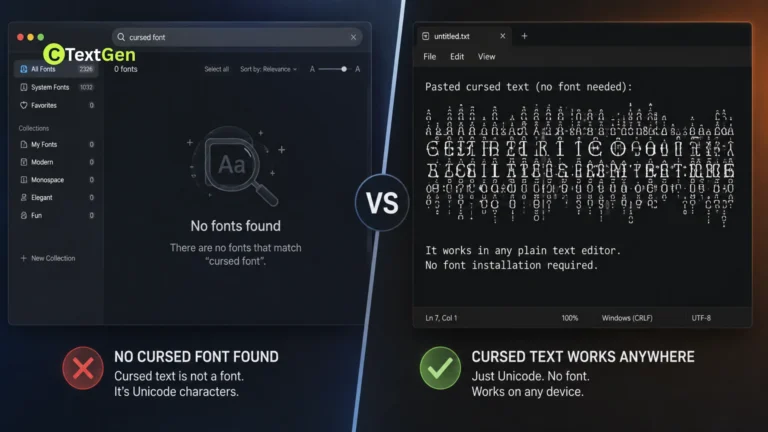
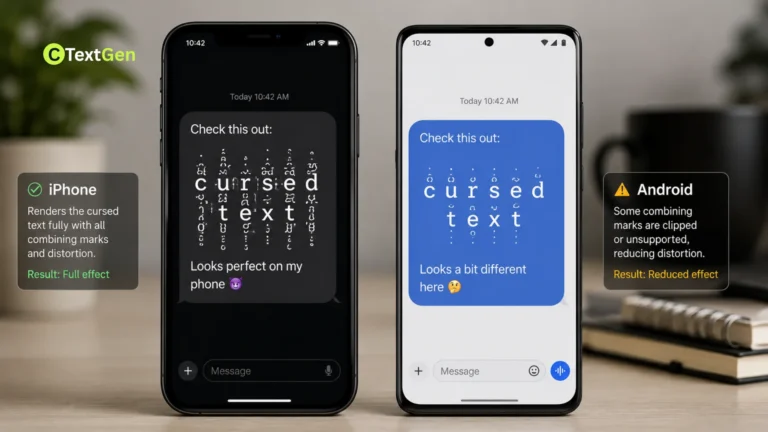
- Assuming Unicode distortion is a downloadable font. It’s plain text with extra characters attached, not a font file, so it can render differently across devices.
- Overdoing distortion in body text. Whether it’s a warped paragraph in a design layout or heavy Unicode marks in a long message, too much distortion sacrifices readability for effect.
- Ignoring accessibility. Screen readers can struggle with dense Unicode combining marks, and heavily warped design text can be difficult for readers with visual impairments, so both versions need to be restrained in accessible contexts.
- Confusing the two categories. Asking a Photoshop forum how to make Zalgo-style Unicode text, or asking a text generator how to warp a logo, wastes time since the tools and skills involved don’t overlap.
Frequently Asked Questions
Do I need design software to create distorted text?
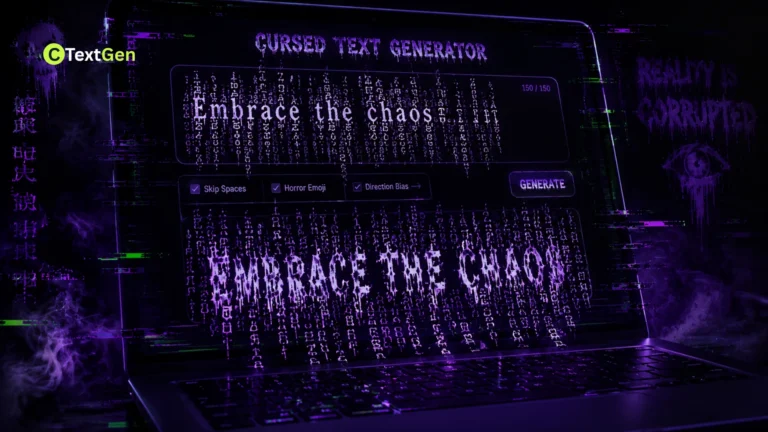
Only for the visual, image-based version. Unicode-based distorted text, the glitchy kind seen in usernames and captions, needs nothing more than a web-based generator and a place to paste the result.
Why did my distorted text turn into question marks or boxes after I pasted it somewhere?
This usually happens when a platform doesn’t fully support the Unicode combining marks behind the effect and either strips them or substitutes a placeholder character. Usernames, SMS, and strict form fields are the most common places this occurs.
Is there a copyright issue with using distorted fonts for commercial purposes?
It depends on the specific font or effect. A distortion technique itself, like stretching or warping, isn’t copyrightable, but the underlying font file might be licensed for personal use only, so check the license before using warped or distorted typography in commercial branding.
How do fan fiction and forum sites usually handle this kind of text formatting?
Sites built around long-form text, including fan fiction archives, generally allow Unicode-based distorted text to display, though heavy formatting can affect readability, and some communities discourage it in body text for that reason. A helpful example of readers puzzling out this exact question can be found in this Reddit discussion asking what a specific text effect is called.
What’s the difference between distorted text and a glitch font family?
A glitch font is a static, downloadable typeface designed to look broken from the start, with fixed letterforms. Unicode-based distorted text isn’t a font at all. It’s ordinary letters with extra characters stacked on top, which is why it behaves differently across apps and devices.
Conclusion
What is distorted text? The main takeaway is that it isn’t one single thing, and treating it that way is why so many pages on this topic fall short. It’s a legitimate design technique with roots in print and poster typography, and separately, it’s a Unicode-based trick that lets anyone glitch out plain text without touching an image editor. Knowing the distorted text meaning in both contexts, and understanding how distorted text vs cursed text actually differ, means you can find the right tool for whichever version you’re actually after instead of wading through generator sites that only cover half the picture.