What Is Creepy Text? How Is It Shockingly Different from Cursed Text?
What is creepy text? Google gives you two very different results. Half the results are font generators that turn your name into something jagged and unsettling for a Halloween profile. The other half are Reddit threads and horror blogs full of actual scary text messages people claim to have received from strangers, exes, or numbers that don’t exist anymore.
Neither meaning is wrong, and most pages only cover one of them. This article covers both: what creepy text is in the typographical sense, the creepy text meaning behind the actual message-based horror genre, how to get creepy text copy and paste for your own use, and exactly how creepy text vs. cursed text differ, since those two get lumped together constantly.
What Is Creepy Text
What is creepy text? The answer generally falls into two distinct categories that share a name but very little else.
The first is stylized text: normal writing dressed up with distorted or glitchy Unicode characters, making it look unsettling at first sight, used for horror-themed usernames, Halloween graphics, and spooky captions. The second is content-based: actual written messages, real or fictional, whose words are what create the fear, not their appearance. A text from an unknown number saying something unnervingly specific about you falls into this second category, and no amount of font styling is involved.
Both categories are worth understanding because the search intent behind “creepy text” genuinely splits between people seeking a spooky look and those seeking a spooky story.
Creepy Text Meaning in Typography and Fonts
This is the version most generator tools focus on, and it borrows heavily from the same Unicode trick used in Zalgo and glitch text.
How Creepy Text Copy and Paste Actually Works
Creepy-looking fonts online are rarely real, downloadable fonts. They’re built by attaching Unicode combining diacritical marks, the same category of character used for ordinary accents like the tilde in “jalapeño,” to each letter in a phrase. Stack a handful of these marks, and a word gets a subtly rough, eerie edge. Stack dozens, and it turns into the dripping, distorted look associated with horror memes.
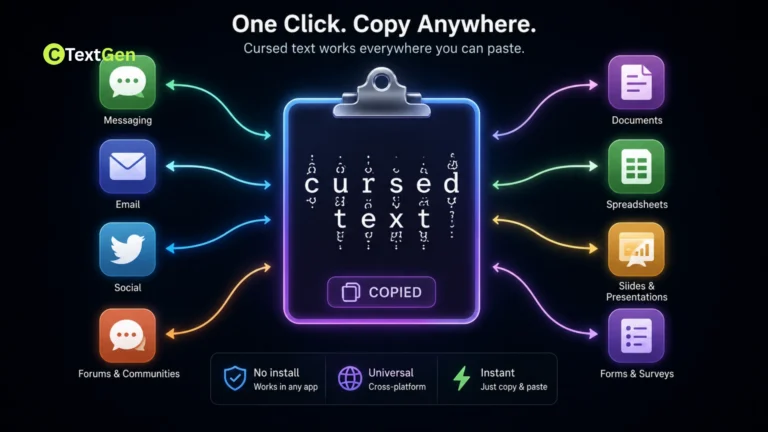
Because it’s plain Unicode text rather than an image or a font file, creepy text copy-and-paste works exactly the way it sounds: you type a phrase into a generator, adjust the intensity, and paste the result anywhere that accepts standard text input, from a Discord bio to a text message itself.
A few practical pointers if you’re generating this kind of creepy text:
- Keep phrases short. Full sentences get unreadable fast once the distortion stacks up.
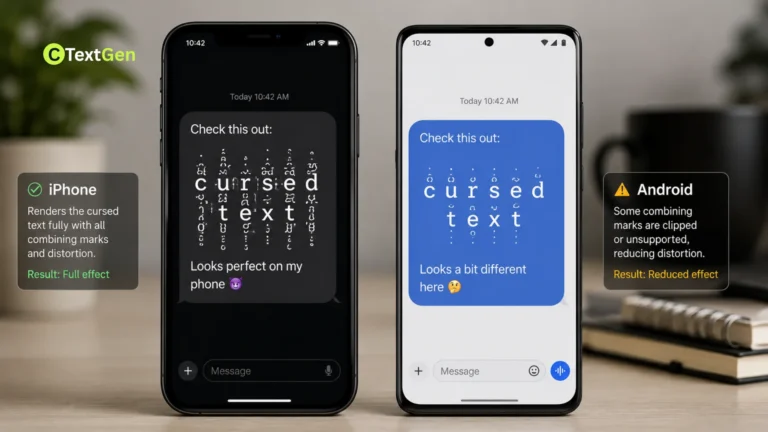
- Preview before posting somewhere permanent, since rendering varies across apps, and some platforms strip heavy distortion entirely.
- Save the plain version separately in case a platform doesn’t support the styled text.
Creepy Text Meaning in Message-Based Horror
Understanding what is creepy text in the context of message-based horror has nothing to do with fonts. It’s about the actual words in a message and the context that makes them unsettling, and it’s a genre with a longer history than most people realize, tracing back to chain letters and chain emails long before smartphones existed.
Common Creepy Text Message Tropes
A few patterns show up again and again in this genre, both in genuine unsettling encounters people share online and in the fictional versions written for entertainment:
- The countdown message in which the sender claims something will happen unless the recipient forwards the text within a set number of minutes.
- The wrong number that isn’t: a text that seems like a simple mix-up, but the sender includes details they shouldn’t know.
- The “I’m inside” trope, borrowed from urban legends about callers phoning from inside a house, is adapted for texting with messages implying the sender can see the recipient right now.
- A dead sender occurs when a message appears to come from someone who has passed away or from a previously disconnected number.
None of these requires any special formatting. The fear comes entirely from the content and the ambiguity around who sent it and why.
Real Creepy Texts vs Scam Texts
When researching what is creepy text, here’s something most horror-focused articles skip entirely: some genuinely creepy-sounding text messages aren’t ghost stories at all. They’re scams. Americans received tens of billions of spam and scam texts in a single recent year, and a specific category known as the wrong-number scam relies on the same unsettling, “how do they know that” feeling that makes fictional creepy texts effective. A scammer sends a vague, oddly personal-sounding message from an unknown number, waits for a reply, and uses the resulting conversation to build trust before asking for money or personal information.
If a message feels creepy because it seems to know something about you, don’t reply, don’t click any links, and don’t share personal details. Blocking the number and reporting it to your carrier is the safer move than engaging, even out of curiosity.
Creepy Text vs Cursed Text
These terms get used interchangeably online, but they’re built around different things.
Cursed text is fundamentally about appearance, which is why people often search for a cursed text generator to create glitchy, distorted Unicode characters for memes and social media posts. The style is closely tied to internet slang, where “cursed” means something feels strange, absurd, or off in a way that’s more surreal than scary. It’s closely related to Zalgo text and glitch text, all built by fusing the same combining-character trick, just at different intensities.
Creepy text is broader and can exist with zero visual distortion at all. A perfectly normal-looking text message can be creepy purely because of its wording, timing, or sender. The overlap only happens when someone deliberately combines the two, using a distorted, glitchy font to deliver an already unsettling message for extra effect, which is common in horror-themed content and Halloween posts.
Put simply: cursed text is a style, and creepy text is an effect. Cursed text nearly always looks a certain way. Creepy text can look completely ordinary and still work.
Where Creepy Text Actually Gets Used
What is creepy text used for in practice? It most frequently appears across these formats
- Halloween social media posts, mixing distorted fonts with spooky captions for seasonal content.
- Horror fiction and creepypasta are fictional text message exchanges written out as part of a larger story, a format popularised on sites built around short horror stories.
- Prank messages between friends, typically using the message-content version rather than font styling, since a genuinely well-written creepy text doesn’t need visual tricks to land.
- Horror game and ARG marketing, where in-universe “leaked” text messages are used to build tension before a release.
Practical Examples
Font-based creepy text: a Halloween Instagram caption styled with moderate Unicode distortion, readable but visually unsettling, paired with a short spooky phrase.
Content-based creepy text: a short fictional exchange where a normal-looking conversation slowly reveals the sender knows something they shouldn’t, written in plain, unstyled text, relying entirely on pacing and word choice for the scare.
Tips for Using Creepy Text Effectively
- What is creepy text for creative writing or visual design? Match the tool to the goal. Reach for a Unicode generator if you want a visual effect, and focus on writing if you want an emotional one. Combining both without a clear reason usually weakens each.
- Keep font distortion light for readability. A caption people can’t actually read loses its impact fast, no matter how spooky it looks.
- Ground content-based creepy texts in specificity. Vague scares fall flat. A message that references a small, plausible detail is far more effective than generic threats.
- Never use real personal details about someone without consent, even as a joke, since a prank text that feels too real can genuinely frighten or distress the recipient.
Common Mistakes to Avoid
- Misunderstanding what is creepy text and assuming all creepy-looking text is dangerous. Distorted Unicode text is just styled writing. It can’t install anything on a device or access personal data on its own.
- Ignoring real scam patterns because a message “feels like a horror story.” The unsettling, personal-sounding wrong-number text you got might be a scam attempt, not a ghost, and treating it as harmless entertainment can lead to sharing information you shouldn’t.
- Overusing heavy font distortion. Long, heavily stacked Unicode text becomes genuinely hard to read and undercuts the mood you’re going for.
- Sending pranks that go too far. A joke that references real trauma, real addresses, or real personal details can cause lasting distress rather than a fun scare.
Frequently Asked Questions
Is a creepy text the same as a spam or scam text?
Not usually, but they can look similar. Genuine creepy text is typically fiction or stylized formatting meant for entertainment, while scam texts use the same unsettling, oddly personal tone deliberately to manipulate a real reply out of you.
Can I use creepy text fonts in a text message app itself, not just social media?
Yes, since it’s plain Unicode rather than an image, creepy text copy-and-paste works in SMS and messaging apps too, though some carriers or apps may trim heavily distorted messages depending on character limits.
What makes a fictional creepy text message actually effective as horror writing?
Specificity and restraint tend to work better than shock value. A message that implies something without stating it outright, paired with a plausible sender and realistic timing, usually reads scarier than an over-the-top threat.
Does a creepy font change how a scam text is perceived?
Scammers rarely use distorted fonts, since the goal is to look like a normal, trustworthy message rather than an obvious horror trope, which is actually a useful clue: an oddly formal or completely plain unknown text is more likely to be a real scam attempt than a heavily styled one.
Where can I find real accounts of unsettling text messages people have received?
Community discussion threads are a good source for this, since they collect firsthand accounts rather than fictional ones. A well-known example is this Ask Reddit thread about the creepiest messages people have received from strangers, which shows the range from harmless coincidences to genuinely alarming messages.
Conclusion
Answering what is creepy text requires looking at more ground than a single generator tool can capture. One half is a visual trick: plain letters buried under Unicode marks, making them look unsettling at first glance. The other half has nothing to do with fonts at all and lives entirely in the words themselves, the pacing, and the mystery of who’s actually sending them. Knowing the difference between creepy text vs. cursed text, and understanding when a genuinely eerie-sounding message might actually be a scam rather than a story, makes this one of the rare internet trends where the practical value matters just as much as the spooky factor.