Can Cursed Text Cause Glitches That Actually Break Your Device
You have probably seen it before. A message shows up in Discord or a text thread, and the letters look like they are dripping and melting off the screen. Someone jokes that it will “crash your phone” if you scroll past it too fast.
Can Cursed Text Cause Glitches? The honest answer sits in the middle. Most cursed text is completely harmless and looks chaotic. But under specific conditions, especially with extremely dense text, it genuinely has caused real apps to freeze, lag, and even crash. This guide walks through exactly when that happens, why it happens on a technical level, and whether you need to worry about it on your own phone or PC.
What Cursed Text Actually Does on a Page
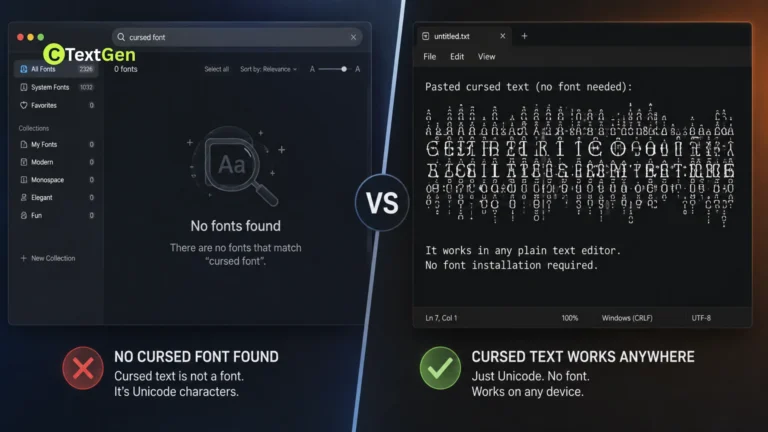
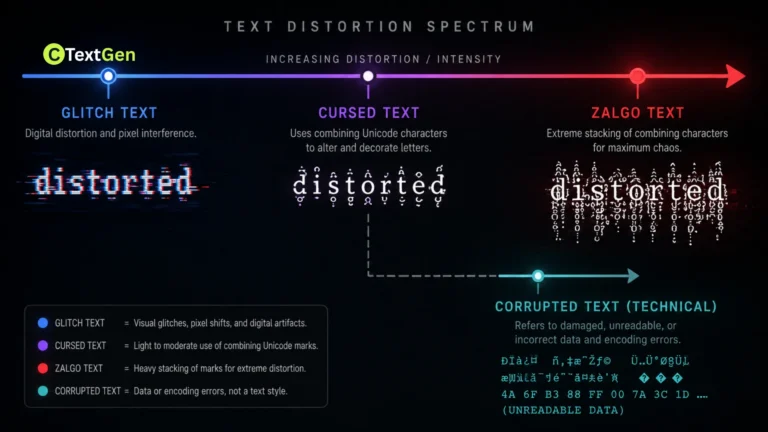
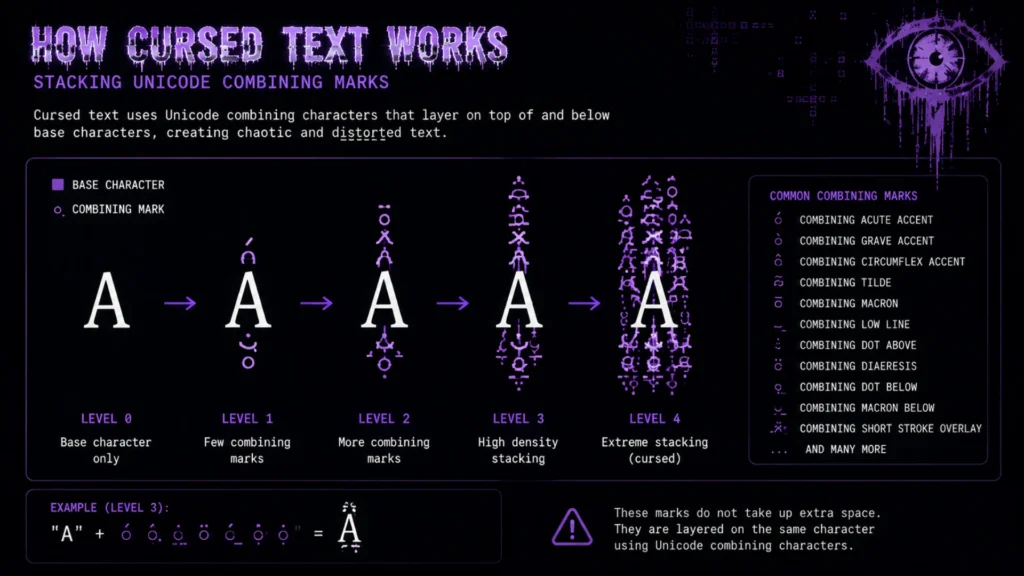
Cursed text, also called Zalgo text or glitch text, is regular text combined with a huge number of Unicode combining characters. These are the small marks that normally sit above or below a letter to create an accent, like the mark over the e in café.
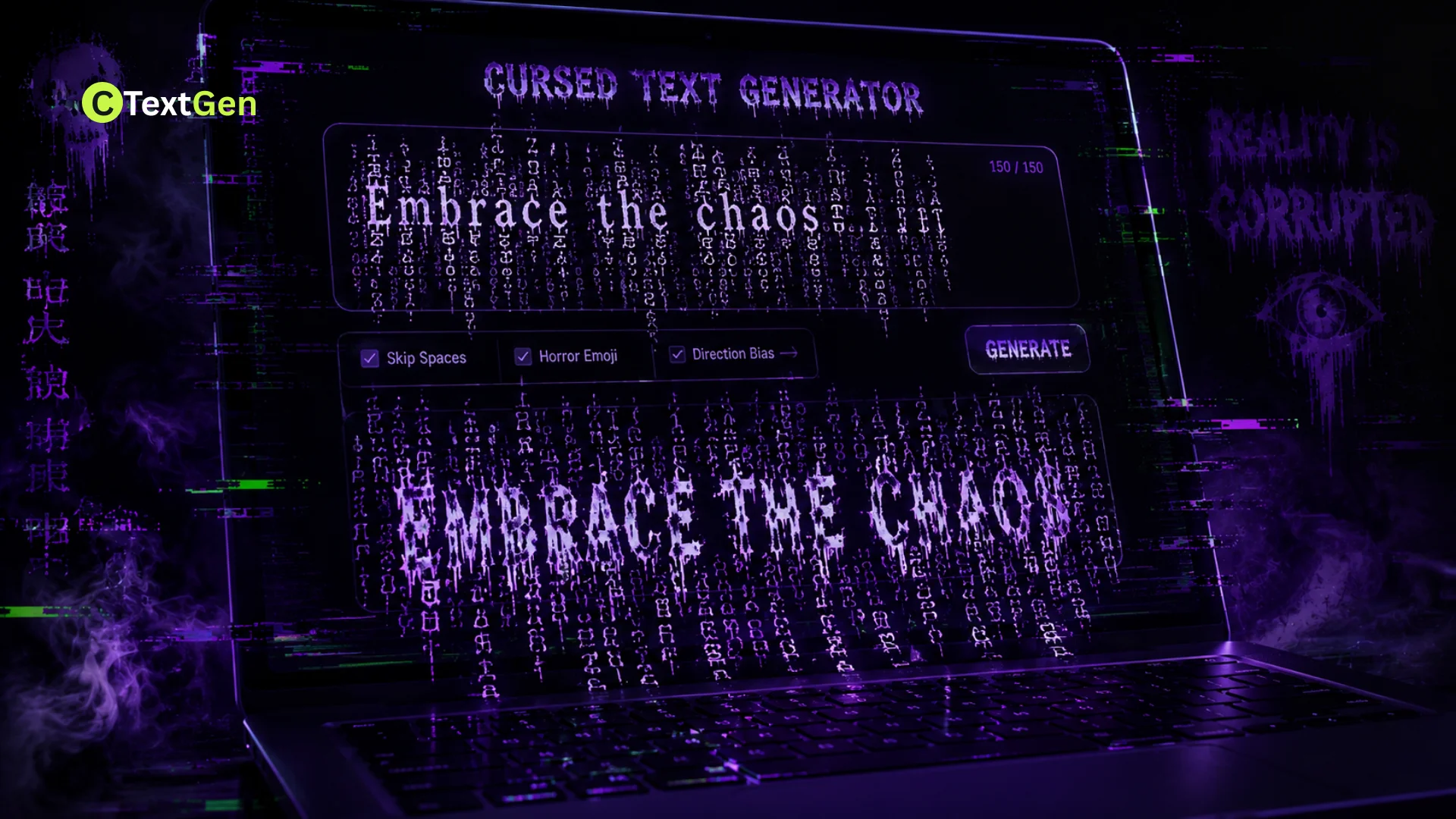
A cursed text generator takes that same feature and abuses it. Instead of adding one or two marks to a letter, it stacks dozens, sometimes hundreds, on a single character. Your device tries to draw every single one of those marks in the same spot, resulting in the dripping, corrupted look people associate with horror memes and creepypasta.
According to Wikipedia’s entry on the topic, Zalgo text is digital text modified with numerous Unicode combining characters, the symbols used to add diacritics above or below letters, so that it appears frightening or glitchy. The style takes its name from a 2004 internet creepypasta story that credits it to an eldritch deity. If you want to prevent your generated text from getting truncated on social platforms, check out our guide on cursed text character limits to avoid unexpected cutoffs.
Nothing about that description involves executable code. It is still just text. But the sheer volume of characters is exactly what creates the real technical problems described below.
Can Cursed Text Cause Glitches on PC
Yes, in specific situations, though it is less common than people assume. On modern desktop browsers or apps, rendering engines like those in Chrome, Firefox, and Safari are built to handle large amounts of Unicode without failing. Scrolling past a normal cursed comment or Discord message will not hurt your PC.
The problem arises when the density of combining marks far exceeds that of a typical generator. Every combining mark attached to a letter has to be calculated and positioned individually by the rendering engine. A short cursed word might carry twenty or thirty marks per letter. Feed that same word back into a generator repeatedly, or paste an extremely long cursed string, and that number can climb into the thousands per character.
At that point, your PC’s browser or app is no longer just displaying text. It is running a heavy layout calculation for every single mark, over and over, every time the page repaints or you scroll. On older or lower-powered machines, that workload can cause the browser tab to freeze temporarily or become unresponsive. A well-known thread on the Scratch community forum documented this directly, with users explaining that pasting extreme output back into a generator repeatedly can produce text that goes far past the maximum intensity level the generator normally offers, creating more characters than some computers can handle and, in their reported cases, crashing the browser entirely.
That is the key distinction. A normal cursed message someone pastes into a group chat is not going to crash your computer. Deliberately generated, extreme-density Zalgo text, sometimes called a text bomb, is a different story.
Why Extremely Dense Cursed Text Causes Real Crashes
To understand why this happens, it helps to know what your device is actually doing when it renders cursed text.
Every Combining Mark Adds Rendering Work
A rendering engine has to calculate where each mark sits relative to the base letter, stack it correctly, and repeat that process for every mark attached to every character in the string. In ordinary writing, this is a trivial task since most letters carry zero or one mark.
Cursed text multiplies that workload dramatically. A single letter with 50 combining marks means 50 separate positioning calculations for that one character alone. Multiply that across a full sentence, and the rendering engine is suddenly doing an enormous amount of extra work for what looks like a short message on screen.
The Text Can Overflow Its Container
Because combining marks stack vertically above and below the base letter, extremely dense cursed text does not just look messy; it can physically overflow the box it is supposed to fit inside. This can push other elements on the page out of position, break the layout entirely, or force the browser to keep recalculating the page as it tries to contain the overflow.
Real-World Incidents Involving Zalgo Text
This is not just theoretical. Zalgo text has actually been used to disrupt real messaging systems. Wikipedia notes that some versions of the Apple Messages app could not properly handle Zalgo text and would crash when attempting to render a message containing it, a weakness that was exploited to carry out denial-of-service attacks against iOS users. Around the same period, Zalgo messages sent through Gmail were also reported to cause crashes.
Those incidents occurred because certain apps at the time were not built to handle unusually dense character-combining stacks efficiently. Developers have since patched many of these specific bugs, but the underlying mechanism, a rendering engine straining under too many stacked marks, is the same one that still causes lag on weaker hardware today.
Can Cursed Text Cause Glitches on Mobile Devices
Mobile devices tend to be more vulnerable than desktop PCs simply because they usually have less processing power. A message that renders instantly on a gaming laptop might visibly stutter on a budget phone.
This is also where you are more likely to notice a real slowdown, since scrolling through a comment section or Discord channel filled with cursed messages means your phone has to repeatedly recalculate the rendering for each one as you scroll. Each message might be fine on its own, but repeated exposure across a long feed adds up, especially on older phones with limited memory.
If you regularly browse communities where cursed text is common, keeping your app updated matters. Newer versions of messaging apps and browsers generally include better safeguards for handling large combining character stacks without freezing.
Is Cursed Text Dangerous or Just Annoying
It helps to separate two distinct concerns here, because people often blend them.
Security-wise, cursed text is safe. It contains no scripts, executable code, or malware. It is built entirely from static Unicode code points, the same category of characters used for accented letters in dozens of languages. Copying and pasting cursed text will not install anything on your device or steal your data.
Performance-wise, extremely cursed text can be a genuine nuisance. At high enough density, it can freeze a browser tab, make an app stutter, or, in older or unpatched software, crash it outright. That is less a security issue and more a resource-strain issue, similar to how an oversized image or an infinite loop on a webpage can bog down a browser.
Accessibility is the other real concern. Heavy combining mark stacks can seriously confuse screen readers, which may attempt to read out every individual mark or skip the word entirely. That makes cursed text a poor choice anywhere accessibility matters, regardless of whether it causes any performance issues.
Why Cursed Text Sometimes Looks Broken Without Crashing Anything
Not every glitchy-looking result means something went wrong technically. Most of the time, cursed text looks broken because that is the intended effect, not because your device is struggling.
Font support plays a big role here. If a device or app does not fully support the specific combining marks used, you might see empty boxes, called tofu, in place of some marks. Some platforms also limit how much vertical space a line of text can occupy, which cuts off the overflow of a heavily stacked cursed word, leaving it looking chopped off or incomplete.
None of that is your app failing. It is just the natural limitation of rendering unusual Unicode combinations across different fonts and platforms, and it explains why the same cursed phrase can look dramatically different depending on where you paste it.
Does Cursed Text Work the Same Way in Minecraft
Minecraft is a common place where people try to use cursed text, and results vary depending on where you paste it. Signs, written books, and item renames in an anvil generally accept pasted Unicode, so cursed lettering will usually display there. Chat is a different story on Java Edition, since the client filters out most stacked combining marks before they reach other players, which is why cursed text that looks perfect in the input box often collapses back into plain letters once it is sent.
Usernames are the most restricted spot of all. Minecraft account usernames allow only letters, numbers, and underscores, so combining marks are not accepted, regardless of platform. If you want a cursed effect on your character, in-game display names, team prefixes, or signs are more reliable places to try it than the account username field itself.
Common Mistakes People Make With Cursed Text
Pasting generator output back into itself repeatedly. This is the single most common way people accidentally create text dense enough to cause a real slowdown. Each pass multiplies the number of combining marks already in the string.
Assuming all cursed text is equally risky. A short, moderately styled cursed phrase for a Discord bio is nothing like an extreme, repeatedly stacked text bomb. Treating them the same leads to unnecessary panic over completely normal cursed messages.
Using extreme intensity in places that need to stay accessible. Screen readers and older devices struggle with heavy stacking, so save the most intense settings for short, casual, decorative spots.
Forgetting that older software is more vulnerable. The documented crashes in Apple Messages and Gmail both involved specific versions of the software at the time. Keeping apps updated closes most of these known weak spots.
How to Use Cursed Text Without Running Into Problems
Stick to light or medium intensity settings for anything you plan to send in a real conversation. Most generators let you control how many marks get applied per letter, and a moderate setting still looks unmistakably cursed without pushing your device into heavy rendering territory.
Avoid recursively pasting output back into a generator multiple times. That habit is exactly what produces the kind of extreme density that has historically caused real crashes.
Keep your browser, messaging app, and operating system updated. Developers have patched the specific vulnerabilities that once let Zalgo text crash apps like Messages and Gmail, and staying current keeps you protected against similar issues in the future.
Test on your own device before sending cursed text in a public place, especially if you are aiming for a stronger effect. A quick paste into a private chat with yourself shows you exactly how it will render before you share it more widely.
Frequently Asked Questions
Can cursed text cause glitches on a phone or computer?
Extremely dense, deliberately stacked cursed text has caused real crashes in the past, most notably in older versions of Apple Messages and Gmail. Typical cursed text you see in memes or Discord chats will not crash a modern, updated device.
Is cursed text a virus or malware?
No. Cursed text is made entirely of standard Unicode characters. It contains no executable code and cannot install anything on your device.
Why does cursed text lag my browser when I scroll past a lot of it?
Each combining mark requires its own rendering calculation. A feed full of heavily stacked cursed messages forces your browser to repeat that calculation constantly as you scroll, which can cause visible lag, especially on older hardware.
Is glitch text the same thing as cursed text?
They overlap but are not always identical. Cursed text is the broad category that includes any distorted Unicode styling, while Zalgo text specifically refers to the heavy diacritical mark stacking style. Some tools labeled glitch text use lighter effects that carry less rendering weight.
Why does cursed text work in Discord but not in my Minecraft username?
Different platforms filter Unicode differently. Discord’s display fields generally accept combining marks, whereas Minecraft account usernames allow only letters, numbers, and underscores, which do not support combining marks.
Should I worry about accessibility when using cursed text?
Yes. Screen readers can struggle badly with heavy combining mark stacks, so it is best to avoid cursed text anywhere someone might rely on assistive technology to read your message.
Conclusion
Can cursed text cause glitches? Cursed text sits in an interesting gray area. It is completely safe from a security standpoint, built from nothing more than standard Unicode marks, yet it has a real, documented history of causing crashes when pushed to extreme density on the wrong software. The everyday cursed message you see in a group chat is not a threat to your device. The recursively generated, maximum-density version can absolutely strain a browser or app, particularly on older hardware.
Understanding that difference is really the whole answer. Use moderate intensity, avoid recursive pasting, keep your apps updated, and cursed text stays exactly what it is meant to be: a fun visual trick, not a genuine risk to your PC or phone.